
Schedule a Tour Today! 505.271.0000
Navigating the Ambiguous Loss in Dementia Care
- Admin
- Saturday 28th of September 2024
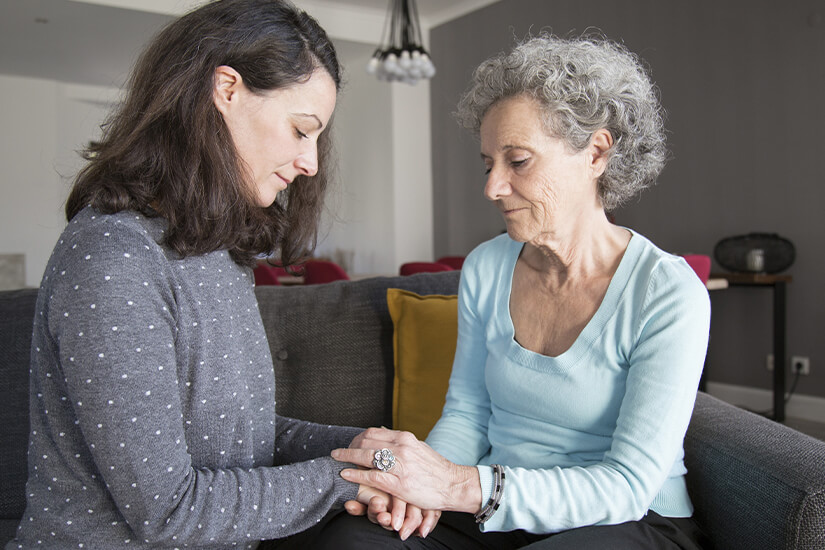
Caregiving for individuals with dementia is a profound and emotionally taxing experience. It is a journey that often feels like a relentless carousel of emotions, where grief, loss, sadness, anger, joy, and acceptance intermingle in a way that challenges our understanding of mourning. Unlike the grief we may have experienced in the past with the loss of a loved one through death, dementia caregiving introduces us to a unique form of loss – ambiguous loss. This type of loss lacks the closure and resolution that traditional grief offers. It defies predictability, leaving caregivers adrift in a sea of uncertainty. It is a grief that often goes unacknowledged and collectively mourned, making it all the more isolating. In the context of dementia care, this ambiguous loss takes a form where the person we are caring for may be physically present but cognitively and emotionally absent. The shifting identity of our loved one as dementia progresses leaves us grappling with a fundamental question: Is the person absent or present? Here, we explore the concept of ambiguous loss in dementia care and emphasize the crucial role that Mayberry Senior Services plays in providing compassionate and comprehensive dementia care in Albuquerque, NM.
Understanding Ambiguous Loss
Ambiguous loss is a term that finds its roots in the pioneering work of Pauline Boss, a clinical psychologist known for her research on loss, grief, and family stress. It refers to a type of loss that lacks clarity and resolution. Unlike the loss of a loved one through death, where there is a tangible endpoint and established mourning rituals, ambiguous loss offers none of these comforts. It is a loss characterized by its vagueness and uncertainty, leaving those who experience it in a perpetual state of limbo.
There are two distinct types of ambiguous loss, and it's the second type that is particularly relevant to dementia caregiving:
- 1. Ambiguous Loss of the Physically Absent, Emotionally Present
This type of ambiguous loss is experienced when someone is physically absent but emotionally present. Examples of such situations include families of prisoners of war, soldiers deployed overseas, or the loved ones of kidnap victims. In these cases, the individual is not physically present, but the emotional connection remains intact.
- 2. Ambiguous Loss of the Physically Present, Cognitively and Emotionally Absent
This is the form of ambiguous loss that resonates deeply with dementia caregivers. In this context, the person with dementia is physically present, yet their cognitive and emotional capacities are altered. The individuals we care for may bear little resemblance to who they were before the onset of the disease. The question that haunts caregivers is whether the person they love is still there, hidden beneath the layers of dementia, or if they have already slipped away. This uncertainty can be emotionally paralyzing, intensifying feelings of mourning and increasing the risk of depression.
The Uniqueness of Ambiguous Loss in Dementia Care
Ambiguous loss takes on a distinctive character in the realm of dementia caregiving. Unlike the first type of ambiguous loss, where the physical absence is clear, the second type is a deeply personal and often devastating experience. In dementia caregiving, the loss remains unclear. There are no wakes, no funerals, and no casseroles from sympathetic neighbours arriving at our door. The world doesn't pause to acknowledge this form of loss. It is a private grief, one that we must navigate largely on our own, leaving us feeling isolated and bewildered.
Ambiguous loss has the power to freeze our grief process, hindering our ability to move forward. Our brains are wired to seek clarity, predictability, and consistency in our close relationships. Yet, caregiving dementia thrusts us into a world of ambiguity, where we grapple with uncertainty and indecision. The very nature of this loss makes it difficult to master, for how can we master something that remains elusive? We may find ourselves immobilized, hesitant to reorganize our lives due to the constant uncertainty surrounding the loss.
The Ambiguity Dilemma
As caregivers, we often find ourselves standing at a crossroads, grappling with difficult questions. Do we move forward and adapt to this new normal, accepting the absence of the person we once knew? But in doing so, do we risk losing the parts of our loved ones that are still present? How do we navigate this complex, ever-shifting relationship with someone physically present but cognitively and emotionally absent?
This is where Mayberry Senior Services in Albuquerque, NM, steps in as a guiding light. They understand the profound psychological impact of ambiguous loss on caregivers as they walk the challenging path of dementia care. By acknowledging and addressing the unique challenges posed by ambiguous loss, Mayberry Senior Services offers a supportive environment that enables caregivers to begin managing their unresolved grief.
Conclusion
Dementia caregiving is a journey marked by unique challenges, where caregivers must grapple with the concept of ambiguous loss. This form of loss, characterized by its lack of closure and predictability, often leaves caregivers feeling adrift and isolated. In Albuquerque, NM, Mayberry Senior Services stands as a pillar of support and understanding for individuals and families on this difficult path.
Mayberry Senior Services recognizes the profound impact of ambiguous loss on caregivers and provides a sanctuary where they can begin to manage their unresolved grief. Through their specialized programs and expert guidance, caregivers learn to accept the ambiguity of their loss, celebrate the remaining facets of their loved ones, and navigate the ever-evolving relationship with grace and resilience. Mayberry Senior Services offers a place of hope and healing, helping caregivers find their middle ground as they ride the emotional carousel of dementia care in Albuquerque.























Contact Us
Get In Touch - Senior Care Service in Albuquerque
If you have any questions or would like more information, please feel free to contact us—we are here to help!
Phone
Hours (Mon to Fri)
8:30 AM – 5:30 PM
Address
5528 Eubank Blvd NE Suite 1 | Albuquerque, NM 87111